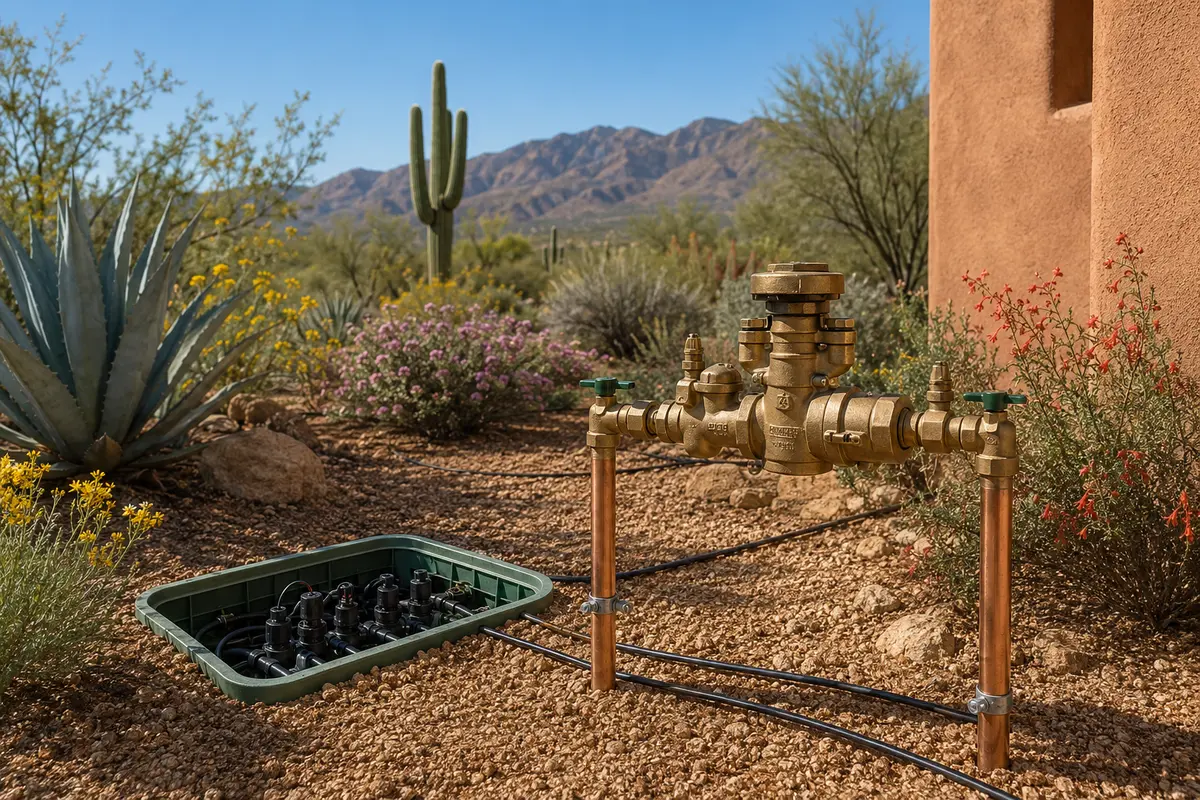
A qualified provider should help keep your irrigation backflow assembly tested, documented, and ready to protect the drinking-water connection serving your property. This Northwest Tucson resource provides information about irrigation backflow testing and service support for residential landscapes, commercial properties, multifamily communities, and managed sites across Marana, Oro Valley, Catalina, and northwest Tucson.
If you received a testing notice, discovered a leak, or need service before an irrigation project, Review irrigation backflow requirements. Include the property address, assembly information, photos, and any notice or prior test report you have.
Why Irrigation Systems Need Backflow Protection
Irrigation piping is connected to equipment and outdoor conditions that are separate from the normal drinking-water system. Soil, fertilizers, pesticides, animal waste, standing water, and other contaminants may be present around sprinklers and irrigation components. A properly selected and functioning backflow prevention assembly helps prevent unwanted reverse flow toward the potable water supply.
The specific assembly and testing requirements depend on the water provider, connection, system design, and degree of hazard. A qualified provider should review the information available for your property and help identify the appropriate service step. Final compliance requirements remain with the responsible water provider or authority.
Irrigation Backflow Testing
Many irrigation backflow assemblies require periodic testing by a certified tester. A field test checks whether the assembly’s internal components are performing within the applicable test criteria. If it passes, the result can be documented for the property and submitted as required. If it fails, the test result helps identify which component needs attention.
The backflow testing service is designed to keep the process straightforward:
- Review the request. A qualified provider should collect the property address, device details, notice, due date, and access information.
- Locate and inspect the assembly. A qualified provider should confirm the visible condition and check that the device is accessible for testing.
- Perform the field test. The assembly will be tested using the procedures appropriate for the device.
- Explain the result. A qualified provider should tell you whether it passed and what the next step is if it did not.
- Address documentation. A qualified provider should confirm the reporting information associated with the service and water provider.
If an Irrigation Assembly Fails
A failed test does not automatically mean the entire assembly must be replaced. Internal components may be affected by debris, worn rubber parts, scale, or normal aging. When the device is serviceable, backflow repair followed by a retest may restore proper operation.
Replacement may be the better choice when the assembly body is cracked or severely corroded, shutoff valves are damaged, repair parts are unavailable, or the device has a history of repeated failures. A qualified provider should explain what the test and visible condition indicate so you can compare repair with backflow replacement.
Common Irrigation Backflow Problems
- Annual or periodic test notices that have not been completed
- Water leaking from the relief valve, test cocks, shutoff valves, or fittings
- Freeze damage after an unprotected cold-weather event
- Impact from vehicles, landscape equipment, or construction activity
- Corrosion, sun exposure, or deteriorated outdoor components
- An assembly hidden by plants, soil, gravel, or landscape materials
- Valves that will not operate safely for testing or shutdown
- Changes to irrigation piping, fertilizer injection, or system use
- A failed test requiring repair and retesting
If water is actively flowing from a damaged assembly or the surrounding area is unsafe, isolate the irrigation connection only if you can do so safely and contact the appropriate service provider. Do not force a damaged valve or disassemble a required backflow assembly without understanding the effect on the water connection.
Residential Irrigation Service
Home irrigation assemblies are often installed near the water meter, side yard, landscape controller, or property boundary. Before the appointment, trim vegetation and remove loose objects that block safe access. If the device is inside a locked yard, note the access instructions in the property information.
Testing may require a brief interruption to the irrigation supply. It should not normally require the landscaping to be running, but the condition and configuration of the valves matter. A qualified provider should explain any access or shutdown issue a qualified provider may find before additional work is performed.
Commercial, HOA, and Multifamily Irrigation
Managed properties may have several irrigation meters or assemblies serving separate landscape zones. Accurate device records are especially important when notices, account numbers, locations, and testing deadlines differ across a site. A qualified provider should organize the details provided and help property managers identify which assemblies are included in the requested scope.
Commercial sites may also need coordination around gate access, tenant activity, landscape contractors, or limited shutdown windows. For properties with multiple domestic, fire-line, or irrigation assemblies, see the commercial backflow compliance page.
Protecting an Outdoor Backflow Assembly
Outdoor equipment should remain visible and accessible for inspection, testing, and service. A protective enclosure or insulated cover may help reduce exposure, but it must not prevent required drainage, interfere with assembly operation, or block service access. Avoid burying the device in mulch, soil, or dense vegetation.
Before freezing weather, review the irrigation system’s winterization needs and the assembly manufacturer’s guidance. The correct approach depends on the device type and installation. Turning off an irrigation controller alone may not remove water trapped in exposed piping or the backflow assembly.
Irrigation Changes and Chemical Injection
Adding fertilizer, pesticide, or other chemical injection equipment can change the hazard associated with an irrigation system. Major piping changes, a relocated assembly, a new meter, or a converted system may also affect the required backflow protection. These situations should be reviewed with the water provider, permitting authority, and properly licensed trade as applicable before the system is placed in service.
A qualified provider should use the information you provide to identify the testing or backflow-service portion of the project. A qualified provider should also flag when additional design, plumbing, permitting, or utility coordination appears necessary.
Local Water-Provider Coordination
Testing and reporting procedures vary across southern Arizona water providers. Marana Water identifies backflow requirements for applicable irrigation connections, while Oro Valley operates its own backflow-prevention program. Properties with a Tucson mailing address may still be served by a different water provider, so the service address and account notice are important.
Visit the Marana backflow service and Oro Valley backflow service pages for local planning information. A qualified provider should confirm the available details for the requested service, but the water provider or authority responsible for the connection makes the final compliance determination.
What to Send for provider review
- Property address and water-provider notice, if available
- Testing due date or correction deadline
- Manufacturer, model, size, and serial number if readable
- Photos showing the full assembly and surrounding piping
- Residential, commercial, HOA, or multifamily property type
- Known leaks, freeze damage, failed tests, or prior repairs
- Gate codes, tenant coordination, or other access instructions
- Information about recent irrigation modifications or chemical injection
Irrigation Backflow FAQs
How often does an irrigation backflow assembly need to be tested?
Testing frequency is set by the responsible water provider or authority. Many applicable irrigation assemblies are tested annually, but you should follow the notice and requirements for the specific property and connection.
Do I need to run the sprinkler system for the test?
Usually the landscape zones do not need to operate during a backflow assembly test. The tester does need safe access to the assembly and functioning shutoff valves. A qualified provider should identify any site-specific issue before testing.
Why is my backflow assembly leaking?
Possible causes include debris, worn internal components, pressure conditions, freeze damage, or damaged valves and fittings. A visible assessment and test can help determine whether repair or replacement is appropriate.
Can plants or a cover surround the assembly?
The assembly should remain accessible and visible for testing and service. Covers and landscaping must not interfere with operation, required drainage, or safe access. Keep soil, mulch, and dense vegetation away from the device.
What happens after a failed test?
A qualified provider should explain the failure and the available next step. A serviceable assembly may be repaired and retested. A damaged, obsolete, or repeatedly failing device may need replacement, subject to applicable utility and permit requirements.
Review irrigation backflow requirements
Send the property details, deadline, photos, and any water-provider notice. A qualified provider should review the request and help you plan testing, repair, or replacement for the irrigation backflow assembly.