Need a backflow test for a home, irrigation system, commercial property, or managed community? This Northwest Tucson resource provides information about dependable testing and clear next-step guidance across Marana, Oro Valley, Catalina, Northwest Tucson, and nearby Pima County communities.
Review backflow testing requirements
Local Backflow Testing for Residential and Commercial Properties
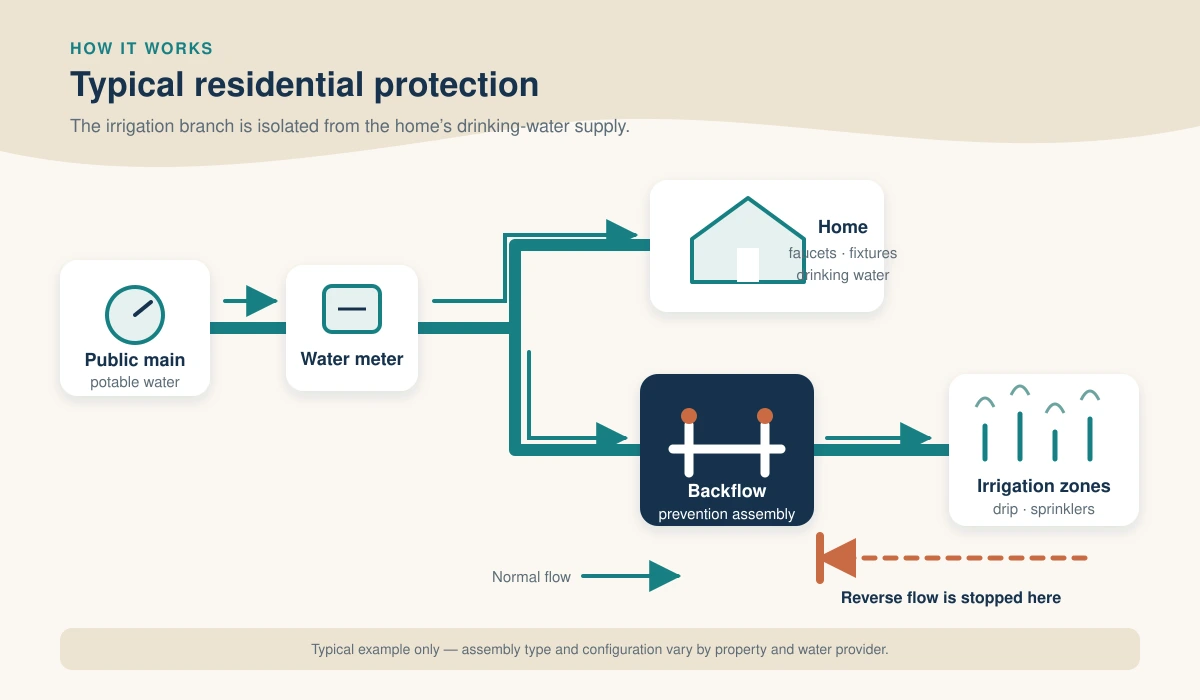
A backflow prevention assembly protects the drinking-water system by helping stop water from reversing direction through a service connection. Testing confirms whether the assembly’s internal components are operating within the required performance standards on the day of service.
Requirements depend on the water provider, property use, connection type, and installed assembly. Some devices require recurring testing, while others may need testing after installation, repair, relocation, or a utility notice. The process begins by reviewing the information you provide and help establish the appropriate next step before scheduling.
Systems Commonly Tested
- Residential assemblies: Backflow protection serving a home or private water connection.
- Irrigation backflow assemblies: Devices separating landscape irrigation from the potable-water supply.
- Commercial assemblies: Devices serving offices, retail properties, multifamily communities, associations, and other managed sites.
- Premise-isolation assemblies: Protection installed near the property connection or water meter.
- Multiple-device properties: Locations with separate domestic, irrigation, fire-line, or specialty assemblies.
If you are unsure what type of device you have, include a photo, prior test report, or utility notice with your property information. Visible information such as the manufacturer, model, size, serial number, and assembly location can Help the provider prepare.
What a Backflow Test Checks
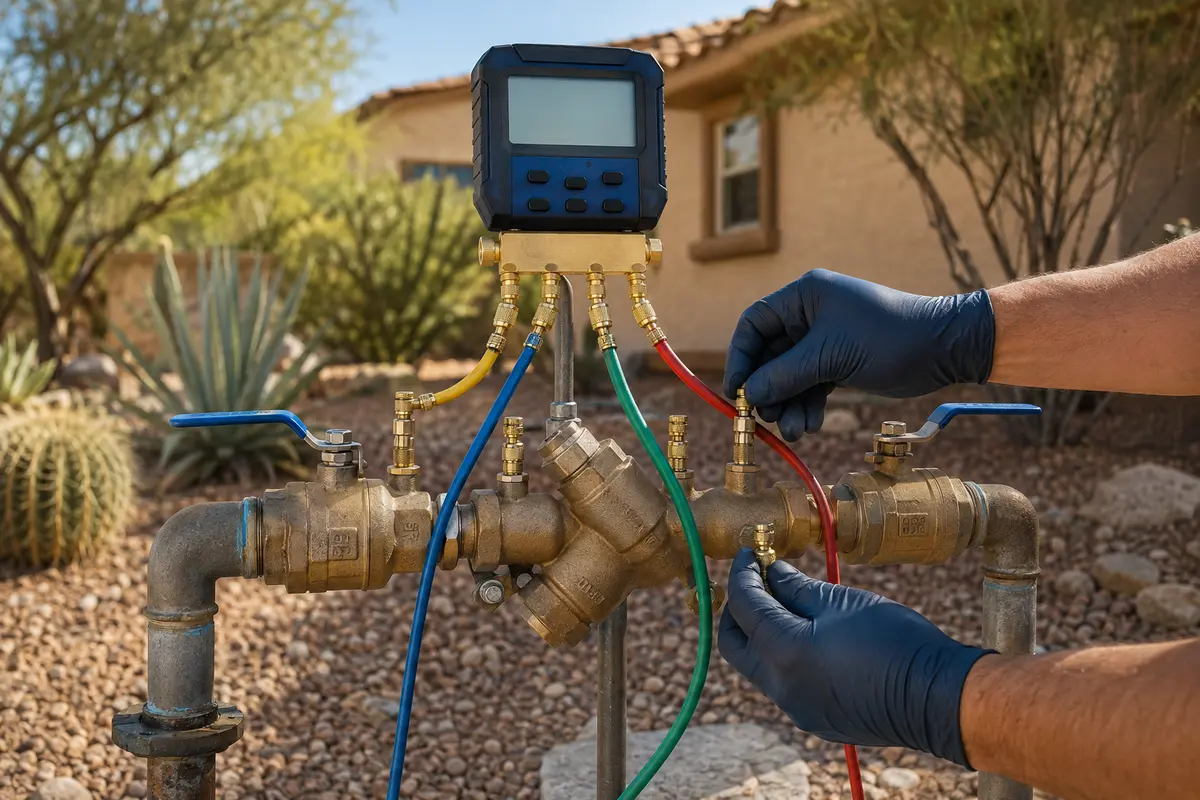
The exact procedure depends on the assembly type. In general, testing evaluates whether the check valves, relief valve, shutoff valves, and related components respond as required. The test equipment measures pressure relationships within the assembly so the tester can determine whether it passes or fails.
A passing result confirms the device met the applicable test criteria at that time. A failed result identifies a performance problem that may require cleaning, adjustment, component repair, retesting, or replacement.
Understanding the Testing Process
- Review the property information. The property owner should confirm the address, water provider, device details, due date, and access instructions.
- Locate and inspect the assembly. A certified tester should verify that the device can be safely accessed and identify its basic information.
- Perform the field test. A certified tester connects calibrated test equipment and evaluate the assembly according to its type.
- Explain the result. You receive a clear pass-or-fail result and practical guidance about any needed follow-up.
- Complete the documentation. The responsible tester or provider should prepare or submit the test information through the applicable utility process when that service is required.
Preparing for Your Appointment
Before the scheduled visit, make sure the assembly is accessible and not blocked by storage, landscaping, locked enclosures, vehicles, or construction materials. Tell the selected provider about gates, tenants, pets, site contacts, restricted work hours, or irrigation schedules that could affect access.
Water service may be interrupted briefly during testing. If the assembly serves an occupied business, sensitive equipment, irrigation controller, or process connection, identify that in advance so the visit can be coordinated appropriately.
What Happens if the Assembly Fails?
A failed test does not always mean the entire device must be replaced. Wear, debris, damaged internal components, leaking shutoff valves, and other conditions can affect performance. A qualified provider should explain what failed and whether backflow repair followed by retesting is a practical option.
When the assembly is badly deteriorated, inaccessible, incorrectly configured, or difficult to repair economically, backflow replacement may be the better long-term solution. Additional work is discussed before it proceeds, and local permit requirements are considered when installation, retrofit, or replacement is involved.
Testing Records and Utility Reporting
Backflow programs use test records to document the assembly, property, tester, test date, measurements, result, and any follow-up work. Reporting methods vary. A provider may use an online portal, a designated form, or another submission process.
For example, Marana Water requires annual testing for applicable assemblies by a certified tester registered with the department. Oro Valley Water Utility operates its own program and notifies customers with service-protection assemblies when yearly inspection is due. The local pages explain more about backflow testing in Marana and backflow testing in Oro Valley. For properties served by Tucson Water, review the Tucson Water backflow testing requirements, including the 45-day notice period and tester reporting process.
Backflow Testing Questions
How often does a backflow assembly need to be tested?
Frequency depends on the water provider, device, connection, and property use. Many applicable assemblies are tested annually, but testing can also be required after installation, repair, relocation, or a program notice.
How long does a backflow test take?
Timing depends on access, assembly type, condition, and the number of devices at the property. Providing clear device and access information helps the appointment run efficiently.
Will the water be turned off?
Testing commonly requires operating the assembly’s shutoff valves, so water service may be interrupted briefly. Tell the provider in advance if the connection serves tenants, business operations, equipment, irrigation, or another time-sensitive use.
Can you test more than one assembly?
Yes. Include every known assembly and its location for provider review. Prior reports or an inventory are especially helpful for commercial properties, associations, and multi-site portfolios.
Do you repair assemblies that fail?
A qualified provider can evaluate the failed result and discuss repair and retesting when appropriate. If replacement is the better option, a qualified provider should explain why and outline the next step.
Review backflow testing requirements
Send the service address, water provider, due date, assembly information, and any notice or prior report you have. A qualified provider should review the request and confirm the appropriate service and availability.